1 Which Art Styles of the Last Fifty Years Owe Their Greatest Debt to Surrealism? How So?
Blog
Exploring art through information using the Artnome database.
Why Love Generative Art?
Over the last 50 years, our globe has turned digital at breakneck speed. No art form has captured this transitional time flow - our fourth dimension period - better than generative art. Generative art takes total advantage of everything that calculating has to offer, producing elegant and compelling artworks that extend the same principles and goals artists have pursued from the inception of modern fine art.
Geometry, abstraction, and chance are important themes not but for generative fine art, merely for all art of 20th Century. As an art historian and an apprentice generative artist, I encounter a articulate line of influence on generative fine art starting from Cézanne and shooting directly through to the:
-
Fracturing of geometry in Belittling Cubism
-
Emphasis on technology, automobile aesthetic, and mechanized production from Futurism, Constructivism, and the Bauhaus
-
Introduction of autonomy and hazard in Dada, Surrealism, Abstract Expressionism
-
Anti-figurative artful, assuming geometry, and intense color of Neoplasticism, Suprematism, Difficult-edged Brainchild, and OpArt
-
Utilize of algorithms by Sol Lewitt and others

Group 4, No. three. The Ten Largest, Youth - Hilma af Klint, 1907
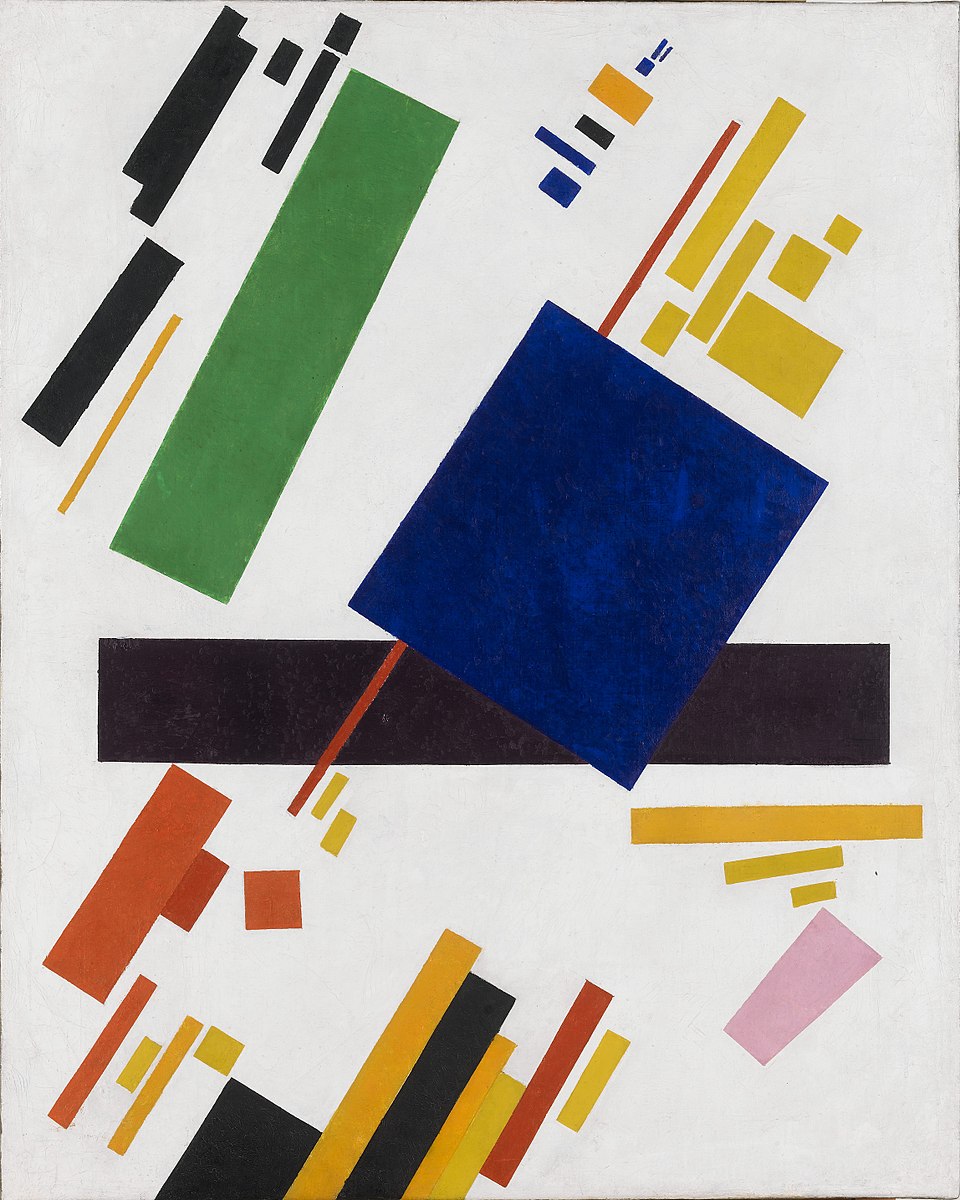
Suprematist Composition - Kasimir Malevich, 1916

Circles in a Circle - Wassily Kandinsky, 1923
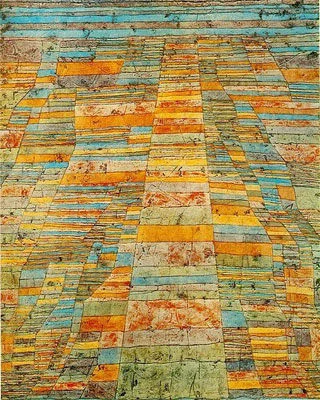
Highway and Byways - Paul Klee, 1928
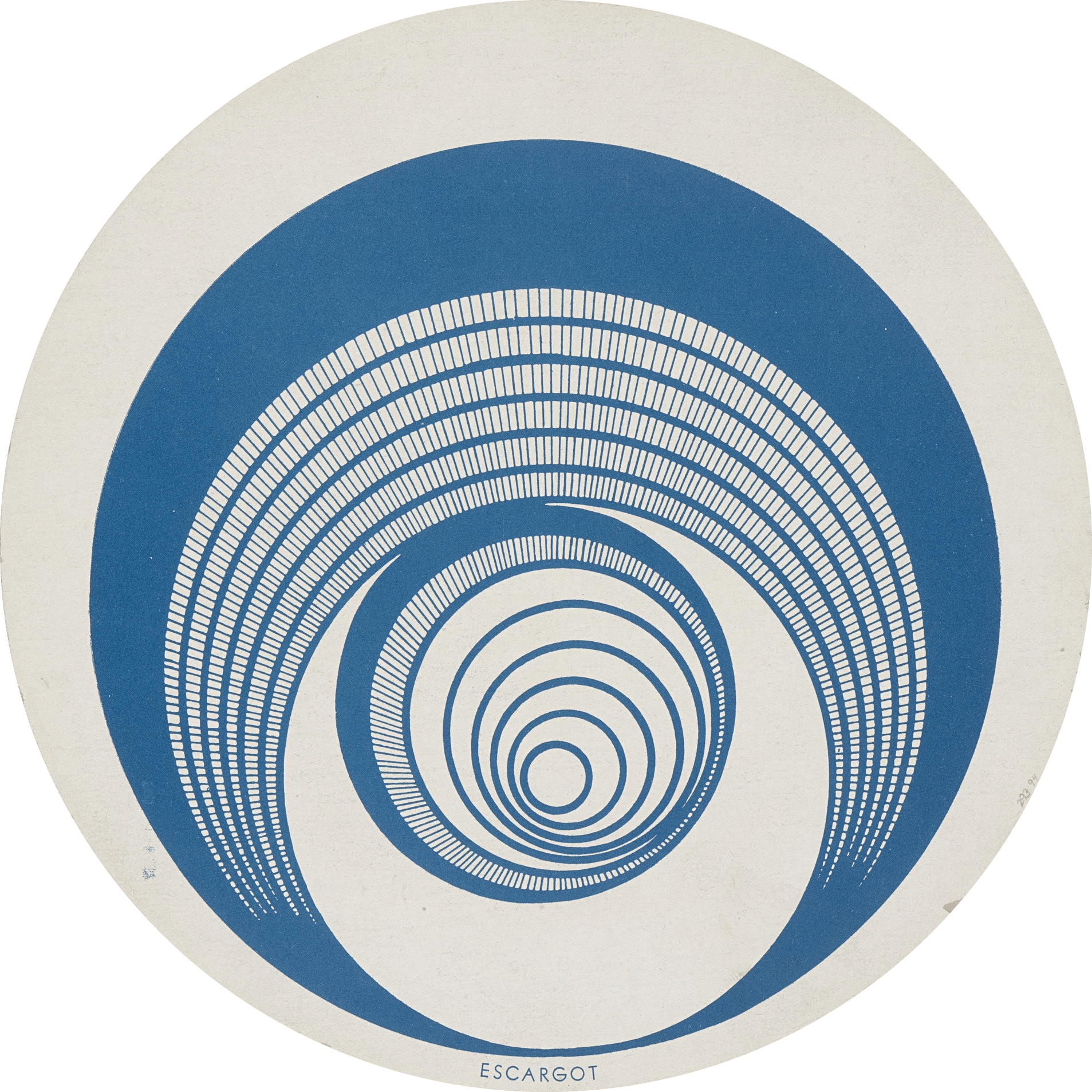
Rotorelief 1 (Optical Disks) - Marcel Duchamp, 1935

Concentric Squares - Josef Albers, 1941
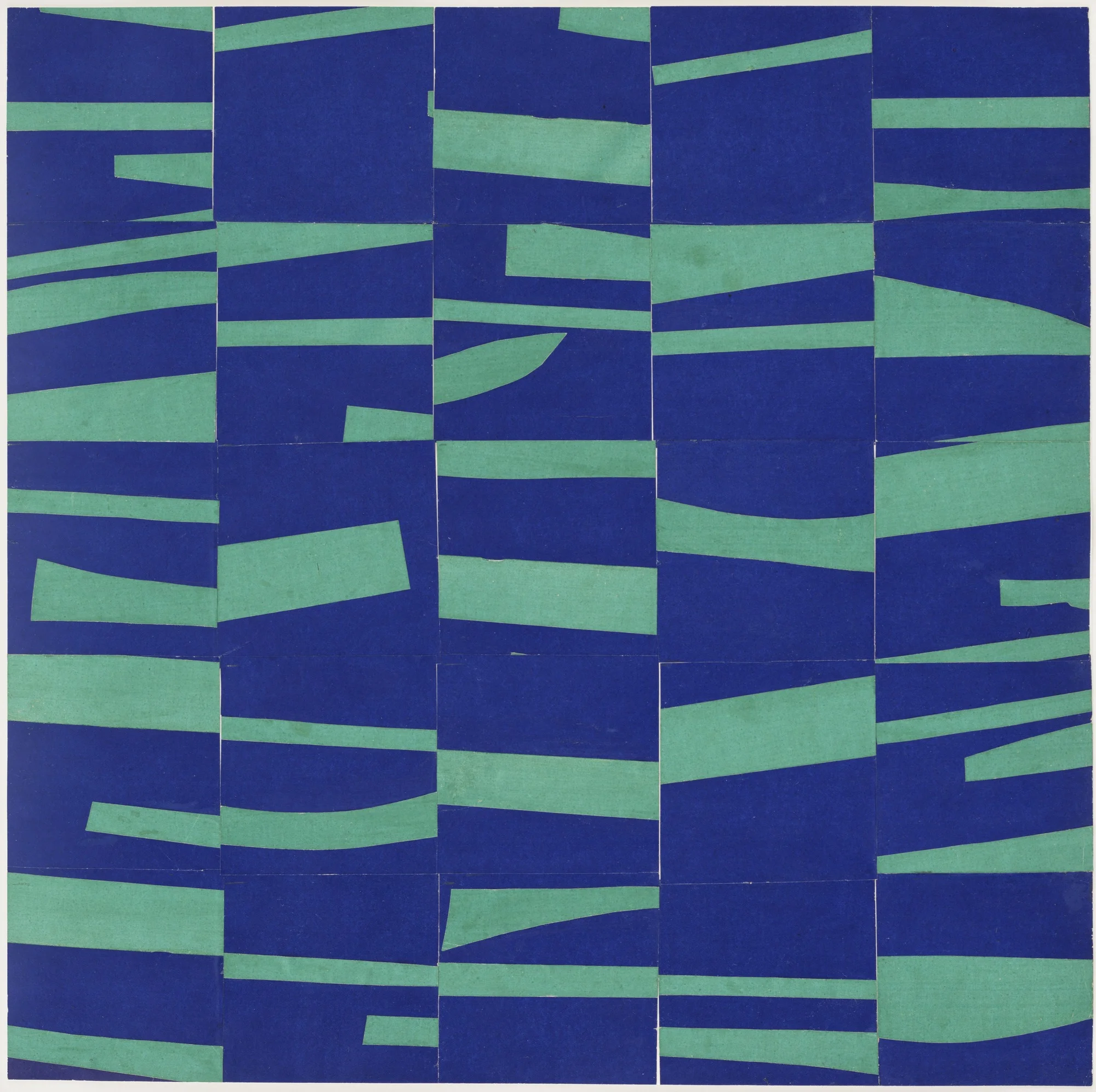
Study for Meschers - Ellsworth Kelley, 1951
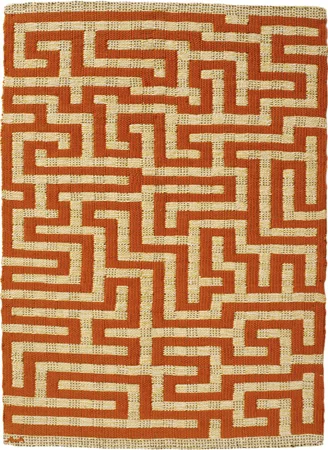
Red Meander - Annie Albers, 1954
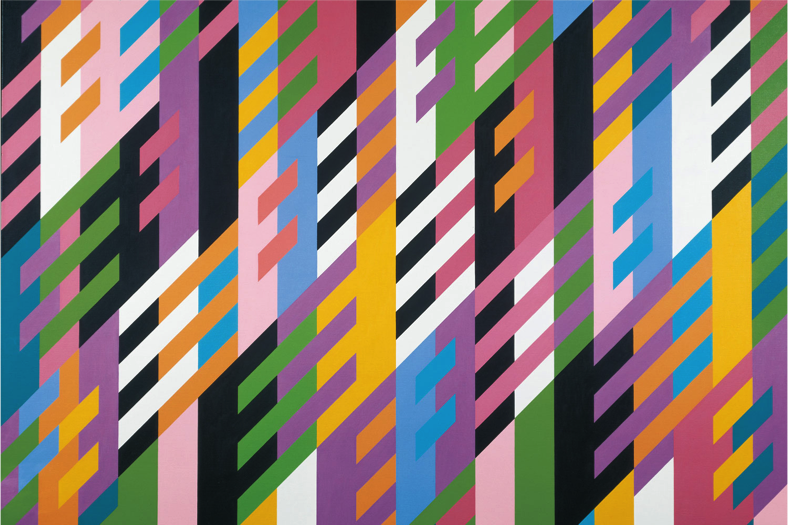
Burn - Bridget Riley, 1964
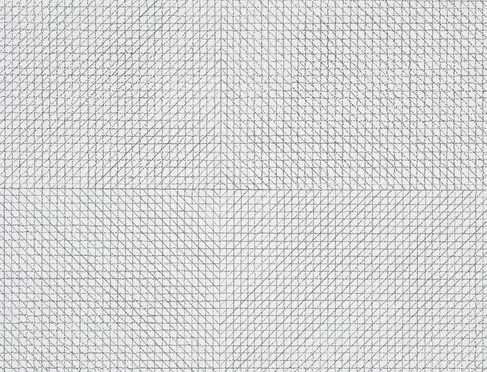
Wall Drawing 11 - Sol Lewitt, 1969
To my eyes, all of these influences and more are tied straight into early generative art through to its mod solar day practitioners. So I cringe when I hear the majority of my fine art-loving friends dismiss generative art every bit being irrelevant, not of interest to them, or even unworthy of being chosen art.
Every generation claims art is expressionless, questioning why it has no Michelangelos, no Picassos, simply to have their grandchildren betoken out generations later on that the geniuses were among united states of america the whole time. Nosotros have a unique opportunity to embrace some of the about important artists of our generation while almost of them are still living (and working). I promise to practice my part in facilitating this through this article. Here nosotros will explore why people so often struggle with generative art and:
-
Offering a simplified definition of generative art
-
Abolish ideas that credit machines for making generative fine art and non the artists themselves
-
Give some non-technical examples of how generative art works
-
Explore some of the history of generative art going back to the early 1960s
-
Highlight my favorite generative artists and share some of their work
-
Examine the earth of generative AI art that is simply now starting to get mainstream attention
Hopefully by the end of this post you will either share my dearest for generative art or you lot volition at least exist able to intelligently communicate your distaste for the genre.
What is Generative Art?

Path - Casey Reas, 2001
One overly elementary but useful definition is that generative art is art programmed using a computer that intentionally introduces randomness as office of its creation process. This often brings up two common only misguided viewpoints that hold people back from affectionate the beauty and nuance of generative art.
Myth One: The creative person has complete control and the code is always executed exactly as written. Therefore, generative art lacks the elements of adventure, blow, discovery, and spontaneity that often makes art great, if non at least human and outgoing.
Myth Two: The artist has zero control and the autonomous machine is randomly generating the designs. The reckoner is making the fine art and the human deserves no credit, as it is non really fine art.
The truth is that generative artists skillfully command both the magnitude and the locations of randomness introduced into the artwork.
Controlled randomness may sound contradictory, but if you are an artist or an art historian, you know that artists have ever sought ways to introduce randomness into their work to stimulate their inventiveness. Thinking about the process of coding generative art every bit beingness similar to painting or sketching is actually spot on. In fact, we will see that the tool favored by near generative artists refers to the individual artworks produced as "sketches."
Allow'due south Look at Some Early Examples of Generative Fine art
Let's look at Georg Nees' 1968 work Schotter (Gravel), one of the earliest and best-known pieces of generative art. Schotter starts with a standard row of 12 squares and gradually increases the magnitude of randomness in the rotation and location of the squares equally you move down the rows.

Schotter (Gravel) - Georg Nees ,1968
Imagine for a second that you drew the image above yourself using a pen and a piece of paper and it took you lot 1 60 minutes to produce. It would and so accept you x hours if you lot wanted to add together ten times the number of squares, right? A very cool and of import feature of generative art is that Georg Nees could take added thousands more than boxes, and information technology would merely require a few small-scale changes to the code.
Unlike analog art, where complication and calibration require exponentially more than effort and time, computers excel at repeating processes nigh incessantly without burnout. Equally nosotros volition encounter, the ease with which computers tin can generate complex images contributes greatly to the aesthetic of generative fine art.
As with many innovations, there were several pioneers exploring the potential for generative art in its starting time few years. Frieder Nake and Michael Noll, along with Georg Nees, were all exploring the use of computers to generate art. Dorsum then, computers typically had no monitors, and the work was shared by press the art on plotters, big printers designed for vector graphics.
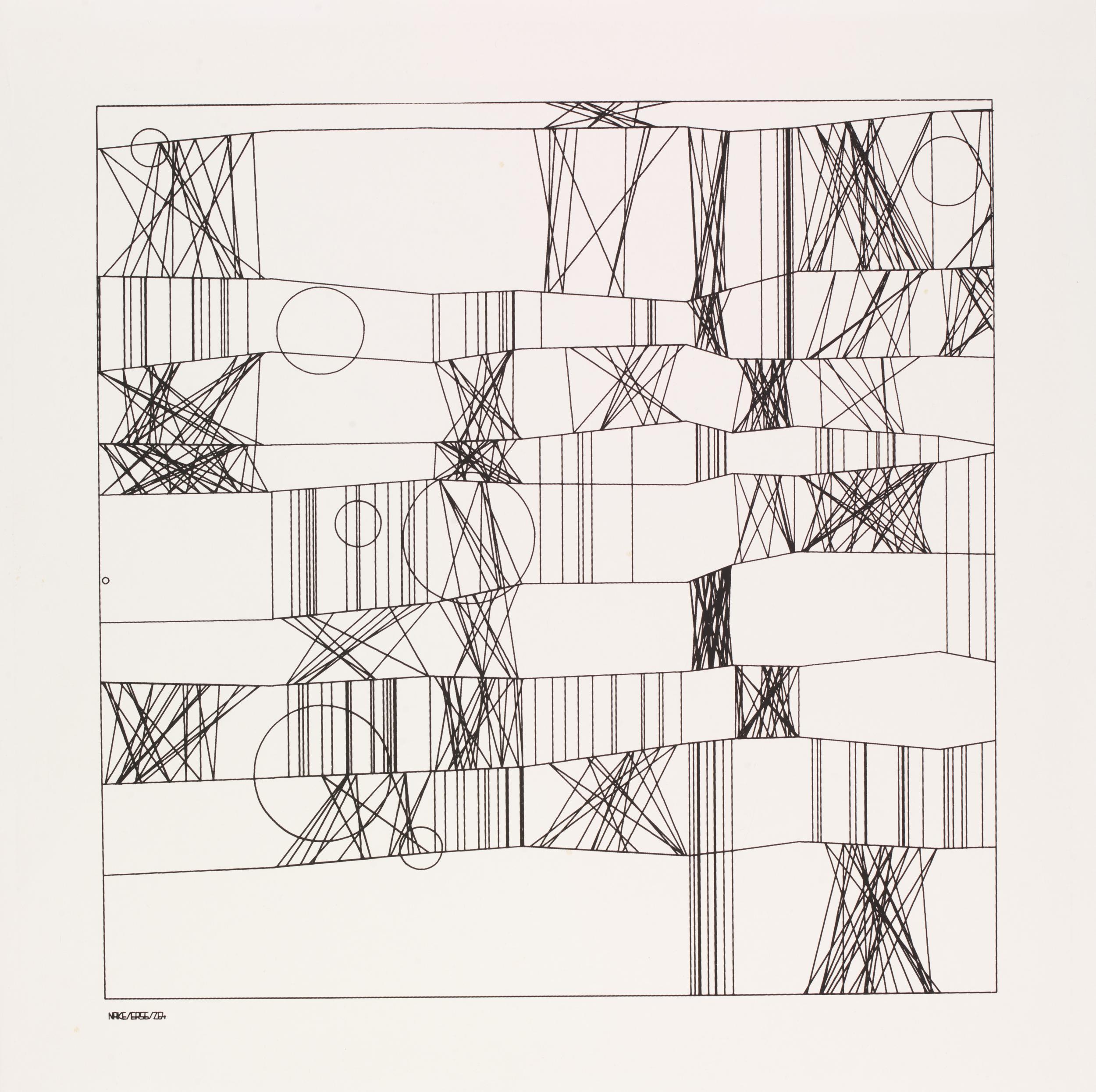
Hommage à Paul Klee - Frieder Nake, 1965
Pioneering Women of Generative Art
It was hard for anyone to be a generative creative person in the '60s and '70s. Computers were primitive, filled unabridged rooms, and access to them was extremely limited. Today most people grew up with computers in their homes and now carry them in their pockets. The bulk of people in those early decades of computing had footling to no contact with computers or frame of reference outside of science fiction. Against this backdrop and in a time where women faced tremendous sexism in the workplace, a large number of female generative artists emerged, making fundamental contributions to the craft and the customs.
Vera Molnár is one of the more than prolific generative artists (a personal favorite of mine), and her work spans several decades. Below nosotros see Molnár's works from the '60s, '70s, and '80s.

Interruptions - Vera Molnár, 1968/69
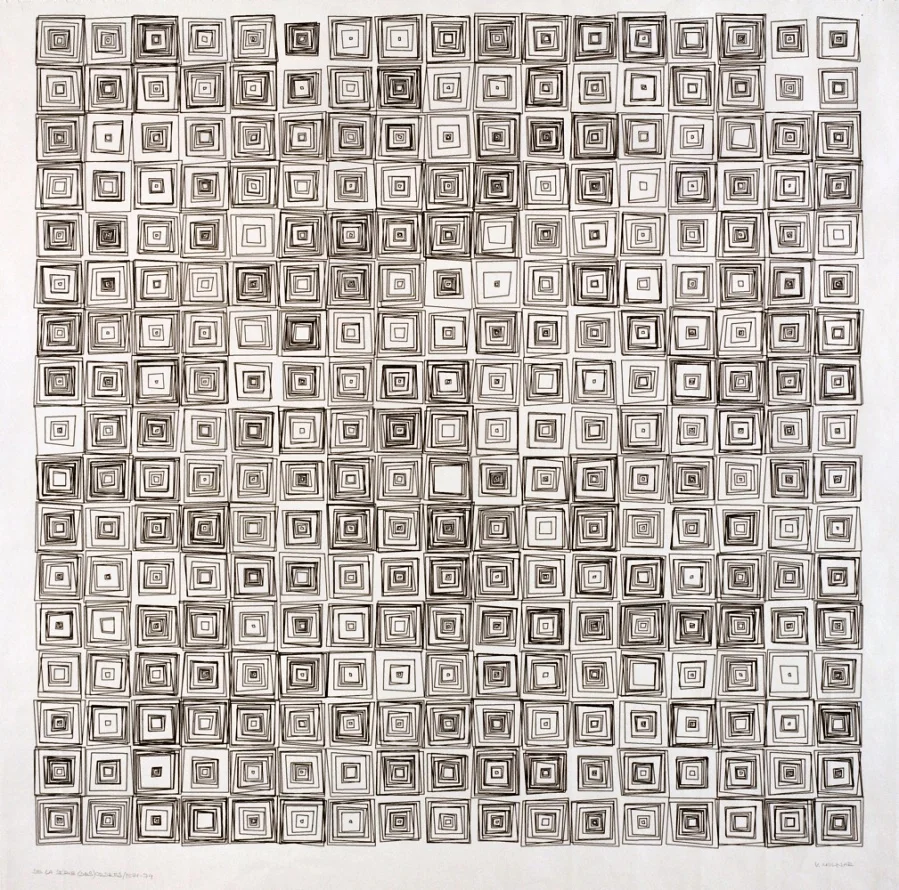
(Dés)Ordres - Vera Molnár, 1974

Untitled - Vera Molnár, 1985
Aware of the full general perception of computers as common cold, logical machines, Molnár spoke of the creative and humanistic gains information technology presented to her equally an artist:
Without the aid of a reckoner, it would not be possible to materialize quite so faithfully an image that previously existed only in the creative person'south mind. This may sound paradoxical, but the automobile, which is thought to be cold and inhuman, tin can aid to realize what is almost subjective, unattainable, and profound in a homo being.
Generative artist and art researcher Lillian Schwartz worked as artist-in-residence at Bong Labs starting in 1968 for over 34 years. Her credentials are impressive. She was the first to have generative art acquired by the MoMA and is often credited, along with her collaborator Ken Knowlton, with beingness the starting time to exhibit animated digital work every bit fine fine art. In a 1982 interview in the Los Angeles Times, Lillian described the cool reception she received from her art world peers when she introduced the computer into her art making practice:
I had a reputation in the arts earlier I got involved in these areas, but when I started using computers, my boyfriend artists began to await on me as a prostitute. I haven't been able to find an artistic circumvolve where I tin can hash out the aesthetics of my work. I've had to supplant my artist friends with computer scientist friends.
Aside from her generative artwork, Lilian is one of my personal heroes for pioneering the use of computer databases in the analysis of art history (my life'southward passion). She shocked the world in 1984 when she used a computer to show that Da Vinci himself was in fact the model for the Mona Lisa.
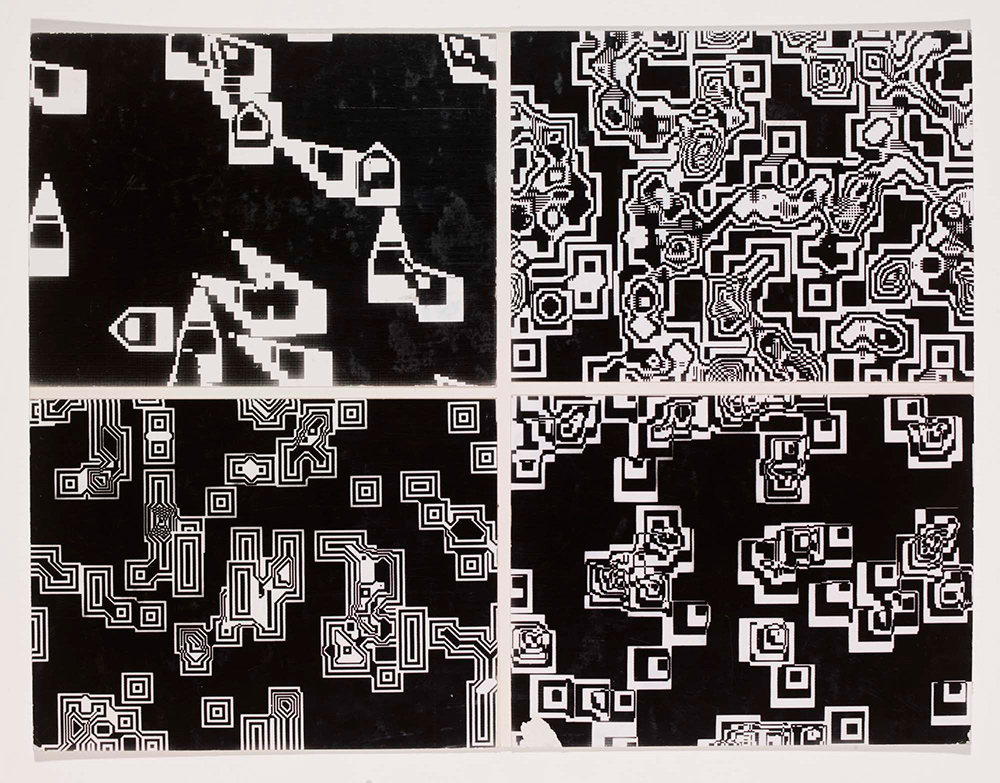
Pixillation, photographic film stills - Lillian Schwartz, 1970
Other primal female person generative artists from the early days of generative art who made enormous contributions in popularizing the genre include Sonia Landy Sheridan, who founded the first generative systems section at the Art Institute of Chicago in 1970, and Grace Hertlein, who helped to popularize the showtime annual generative fine art competition when she became arts editor for Computers and Automation Magazine in 1974.
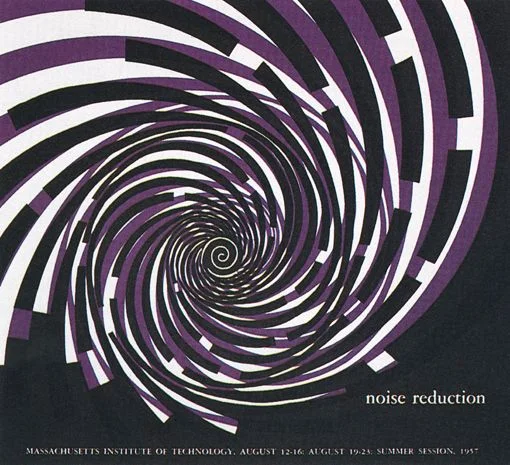
MIT summer sessions poster - Muriel Cooper, 1958
Though not known to be a programmer, Muriel Cooper had as much influence as anyone in establishing the aesthetics of the computing revolution. Cooper was trained in the pattern principles of the Bauhaus and influenced by her friend, chief designer Paul Rand. Cooper imbued these principles at MIT, where she served as a long-time director of the MIT Press. She then founded MIT'southward Visual Language Workshop (VLW) in 1975, which moved to the MIT Media Lab in 1985 as "1 of its founding sources." As we volition come across, the Media Lab went on to exist more important to the development of generative art than whatsoever other singular institution.
A visionary who saw the need to reinvent design in the face of a shifting world, Cooper believed:
The shift from a mechanical to an data club demands new communication processes, new visual and verbal languages, and new relationships of education, practice, and production.
John Maeda and the MIT Media Lab
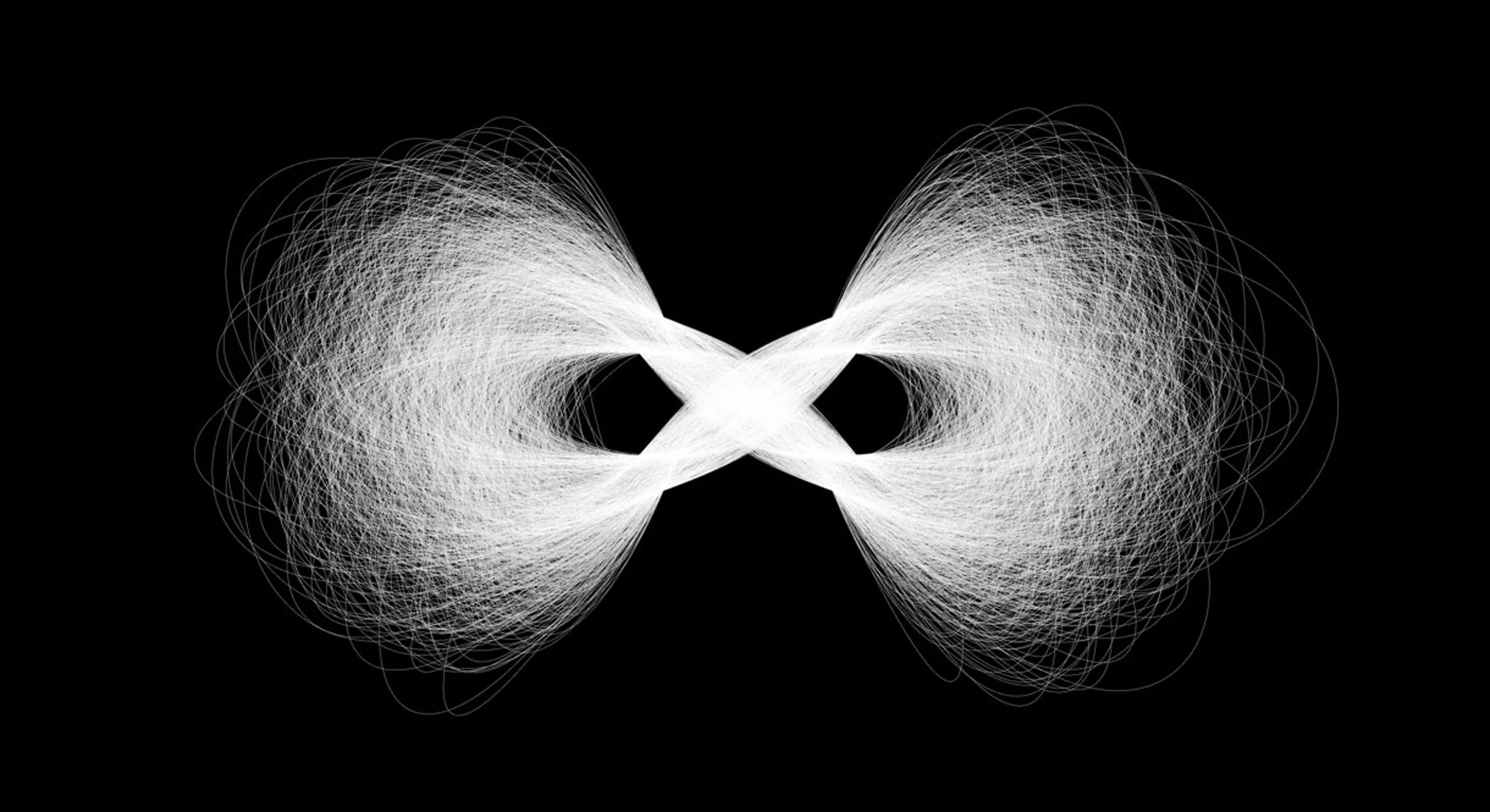
AI Infinity - John Maeda, 1994
Many people may know John Maeda every bit the former president of the Rhode Island School of Design (RISD) or as the writer of the volume The Laws of Simplicity. They may not know that Maeda started equally an engineering educatee at MIT where he was fascinated by the work of Murial Cooper and the VLW. After completing both his bachelor'due south and master'south degrees in engineering at MIT, Maeda earned a Ph.D. in design at Tsukuba University's School of Art and Design in Nihon.
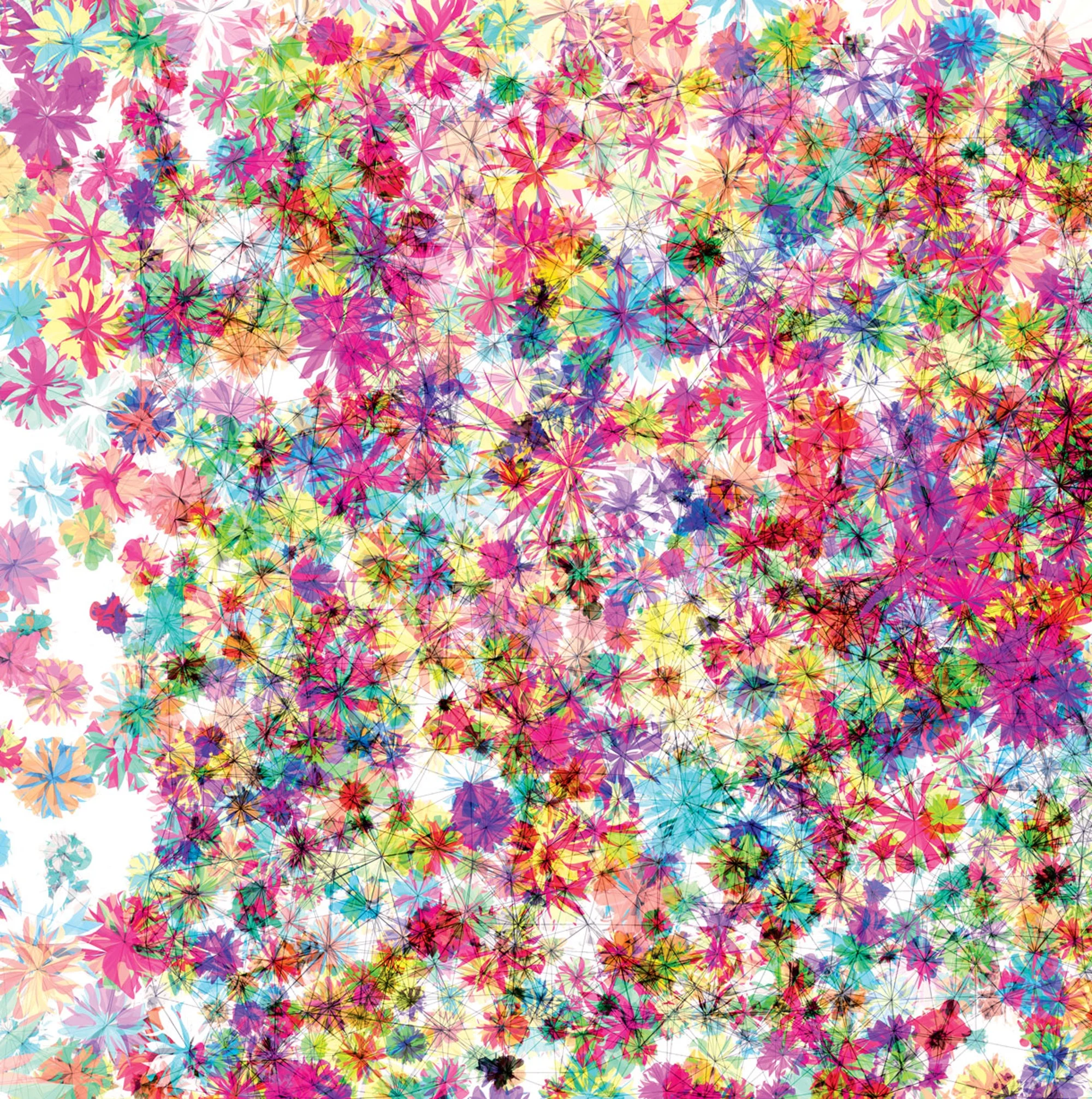
Florada - John Maeda, 1990s
Maeda returned to MIT and created the Aesthetics and Computation Group (ACG) inside the Media Lab. As a grouping, ACG were heavily influenced by the prior work done past Murial Cooper'due south VLW grouping. Though Maeda is an accomplished generative creative person with works in major museums, his greatest contribution to generative fine art was his invention of a platform for artists and designers to explore programing called "Blueprint By Numbers."
In the belatedly '90s Maeda recruited several brilliant and like-minded artists/technologists into the Media Lab to help work on "Design past Numbers," including Ben Fry and Casey Reas. Fry and Reas took Maeda's "Design past Numbers" into classrooms around the earth and somewhen congenital their own free platform that could be shared outside of universities and used past anyone with an involvement learning to sketch with lawmaking. They called this platform "Processing."
Ben Fry, Casey Reas & The Birth of Processing
Processing made generative art accessible to anyone in the earth with a calculator. Yous no longer needed expensive hardware, and more importantly, you did non need to be a computer scientist to program sketches and create art. The linguistic communication, the environment, and the customs were all advisedly crafted from the beginning brand Processing attainable to as broad an audience as possible.
Processing is the key turning bespeak in the production and proliferation of generative art. The massive growth is clear in the graph below.
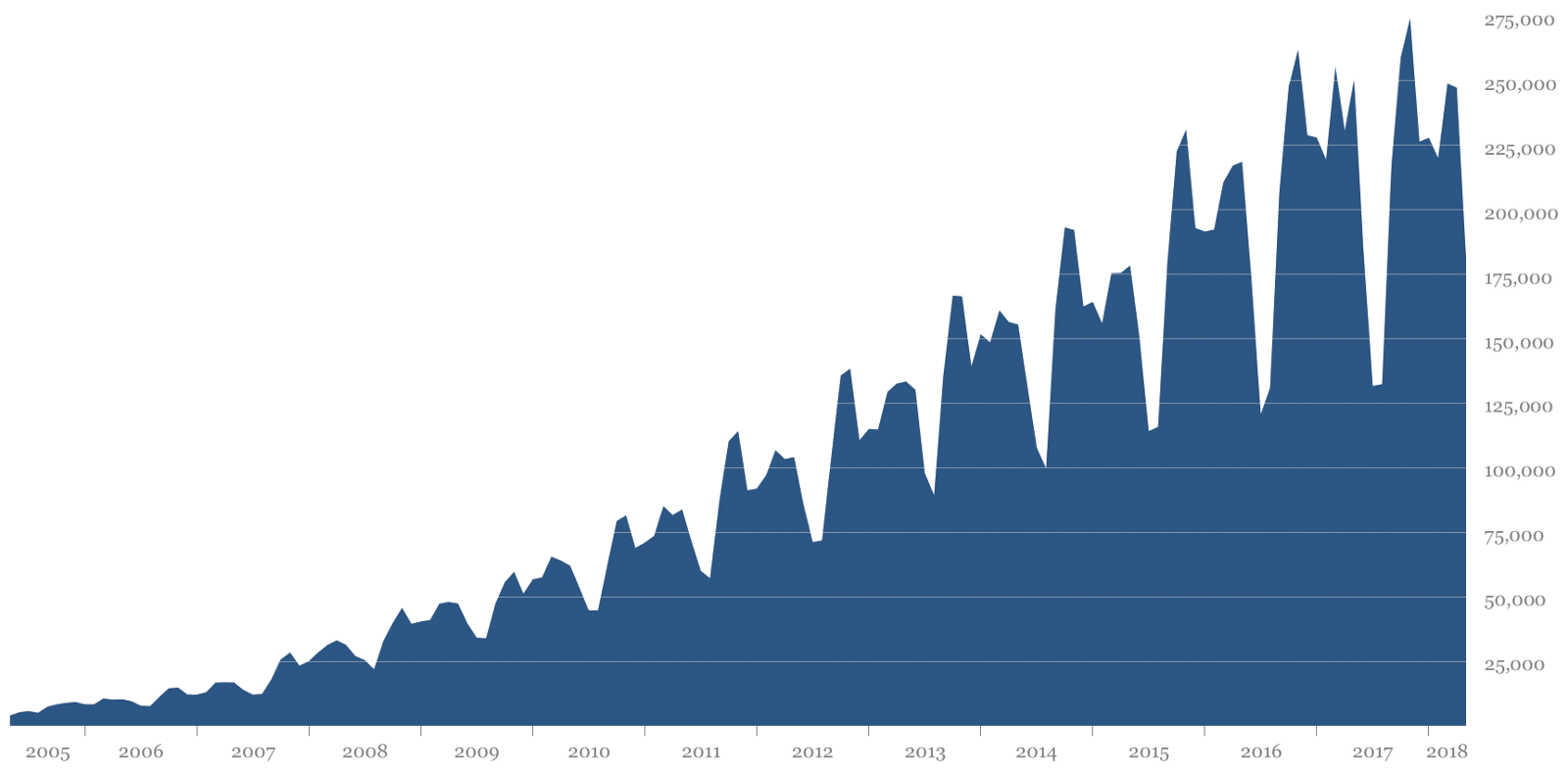
Number of times the Processing software is opened on unique computers each calendar month from 2005 to early 2018. This graph was originally published in Fry and Reas' fantabulous article on the history of Processing, "A Modern Prometheus." The peaks and valleys are correlated with the academic year with the highest points in the fall and the lowest during the summertime. This information doesn't account for shared figurer use or when people turn this reporting off in the software preferences.
Fry and Reas accept worked on Processing over the last 17 years, and and it has long been the preferred platform for the best known generative artists. In 2012 they created the Processing Foundation to "expand our reach and to support the software development," and have added Daniel Shiffman and Lauren McCarthy as members of the foundation board. They have written an excellent mail that details the evolution of the history of Processing that I highly recommend you lot read. Processing'due south affect on an entire generation of artists and programers is nearly impossible to overstate - revolutionizing data visualization, popular civilisation, and fine generative art.

All Streets - Ben Fry, 2006
As an artist trained in traditional painting and drawing, I was a tiresome catechumen to appreciating digital fine art. I was reluctantly working with computers to make a living in the early 2000s, and information technology was my personal opinion for a long time that generative fine art was likewise hard-edged, lacked nuance, and was generally inferior to analog fine art. And then around 2006, I discovered Processing and the piece of work of Jared Tarbell, and everything changed.
Jared Tarbell was creating what I yet consider to exist the most cutting edge, aesthetically pleasing, and engaging generative art way back in 2003 using a relatively early version of Processing. Tarbell, who went on to co-institute the wildly popular handmade goods site Etsy, studied informatics at New Mexico State University. He describes himself as "i part Magical Mystery Tour (Lennon/McCartney), one function Brandenburg Concerto (J.S. Bach), and 1 function Somnium (Robert Rich)".

Substrate - Jared Tarbell, 2003
For me, Tarbell's work is the perfect generative art. It is the poster child for the duality of chaos and control, and has an intense level of visual complexity that slowly emerges from simplicity, making it feel more similar it grew out of the soil than coming from algorithms.

Intersection Amass - Jared Tarbell, 2004
Tarbell'southward code-driven artworks accept a pulse. He makes the digital experience as organic equally any analog art I know of, only it is created through code and is comprised of pixels. His piece of work was a step change for me in terms of believing computers tin can produce art at the highest level.

Bubble Chamber - Jared Tarbell, 2003
Tarbell'south caption of his process reinforces the concepts of controlled randomness in generative art that nosotros accept been discussing.
When you write a program, it's going to exist executed the same way every single time. So if yous define a system like this where things tin happen at random, as the creator, you tin be surprised past your own plan, which is really great.
Earlier Processing, Tarbell was office of a grouping of generative artists developing work on the Flash platform from Macromedia (at present owned by Adobe). His site Levitated.net served as an educational resource for a generation of artists seeking to better understand how to lawmaking in Flash. Y'all can yet admission his open source code on the site.
Joshua Davis, Flash, and Praystation
One of the artists Jared Tarbell cites as a major influence on his work is Joshua Davis. Since 1995 Davis has been using programming to produce art. He is among the start and best known artists to use Flash to create generative art.
You likely remember Flash. We all had a plugin for it in the early 2000s that added blitheness and interaction to the web. Though Davis attended Pratt kickoff for painting then for design, his style is largely self-taught. He emerged from a life of difficult partying to atomic number 82 a movement of Flash artists through a "shit-load of hard work" and continues to create impressive work. As he describes it:
Around 1998 I bought my beginning domain, called praystation.com. I was stoked! I slowly progressed and became more aware of blueprint; I sort of realized who I was and what I was doing, without fifty-fifty knowing I was doing it. There was just a moment when I thought, "I'chiliad a computer creative person now! When did that happen?" I had finally establish the new course of expression I had been looking for: I was going to utilise technology to brand art.

ps3-praystation-v1 - Joshua Davis, 2001

Shapeshifter|Sonic Compages - Joshua Davis, 2001

ps3-praystation-v1 - Joshua Davis, 2001
Davis' unusual blend of difficult work and extreme generosity was disquisitional in spreading Flash equally a platform to other artists for generative art. He was one of the get-go generative artists to brand it a signal to share his lawmaking by going "open up source" so others could learn from him.
I beloved giving stuff abroad. I similar it because that's only what DIY culture tells u.s.. Information technology's about liberty of knowledge: I truly believe that, as humans, we have more to gain by sharing what we know than trying to profit and hoard it.
In 2001 Davis'southward "Praystation" won the Ars Prize Technica, and his work is now in the Cooper Hewitt museum.
Artificial Intelligence & Generative Art
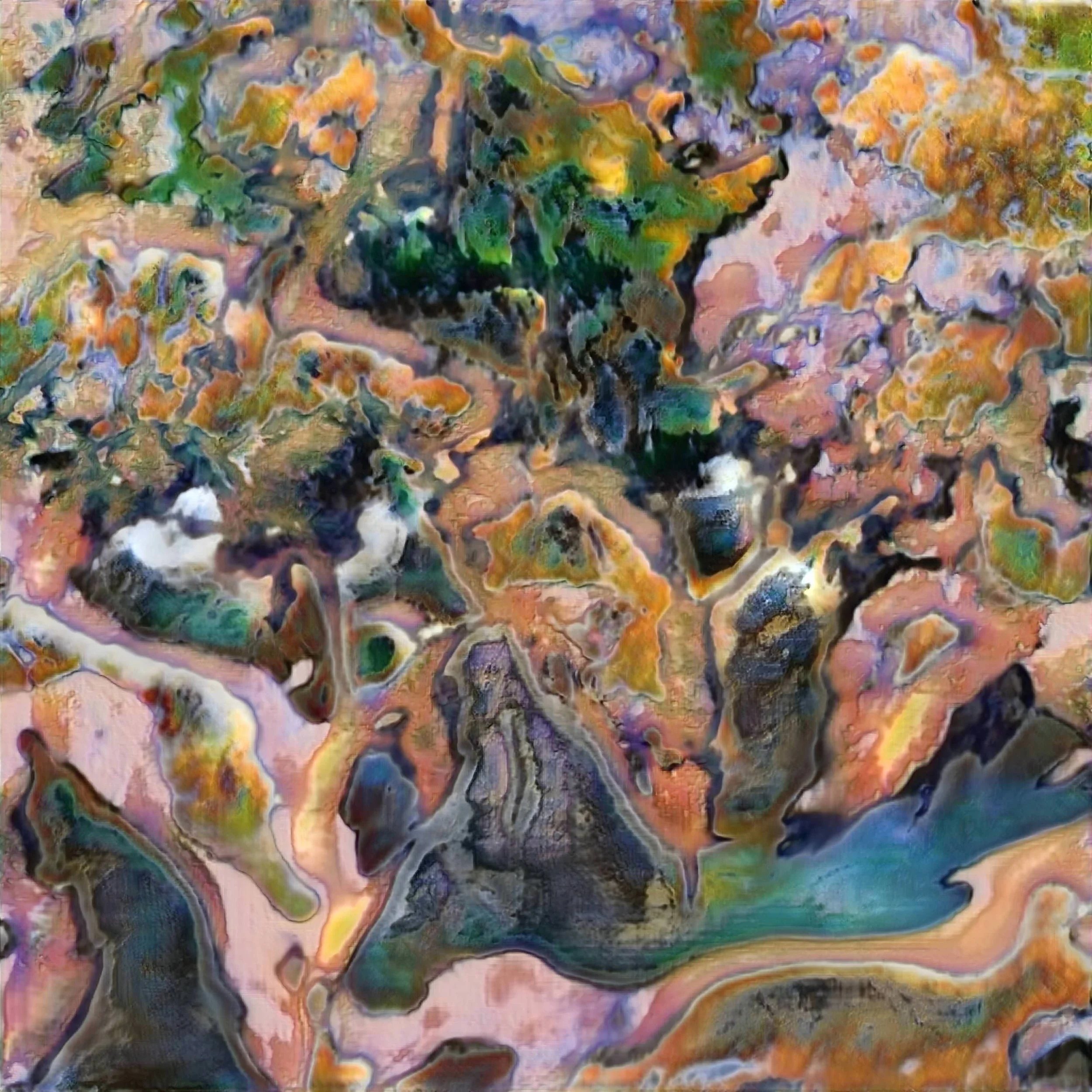
AI Generated Mural #vi - Robbie Barrat, 2018
Though you may detect that the fluid organic imagery is a departure from the geometric abstraction nosotros take seen and then far, AI fine art is a subgroup of generative art. Much of the new piece of work in AI art is being created by GANs (generative adversarial networks). GANs are a concept based on neural networks that estimator scientist Ian Goodfellow came up with back in 2014. If it sounds complicated, don't worry, we'll simplify it a chip.
First off, GANs are comprised of two neural networks, which are essentially programs designed to think like a human brain. In our case we tin retrieve of these neural networks equally being like ii people: first, a "generator," whom nosotros volition think of as an fine art forger, and second, every bit a "discriminator," whom we volition retrieve of as the art critic. Now imagine that we gave the art forger a book with 1,000 paintings by Picasso as training material that he could utilise to create a forgery to fool the critic. If the forger looked at only three or four of those Picasso paintings, he may non exist very good at making a forgery, and the critic would likely effigy it out pretty quickly. But after looking at enough of the material and trying over and again, he may really start producing paintings good plenty to fool the critic, right?
This is precisely what happens with GANs in AI art. Artists like Robbie Barrat have been exploring the artistic potential of these systems for image-making for several years.

Nude Portrait - Robbie Barrat, 2018
Barrat did an fantabulous job of explaining this process to me in more than detail (and his function equally the creative person within it) during our interview dorsum in April, 2018.
Just what happens is there is this thing called latent space that emerges later on you railroad train the GAN. All the possible paintings that are possible are laid out in highly dimensional space you lot are feeding into the generator. But the fashion they are laid out isn't random, it truly makes sense. Then if you want to get a similar painting to your previous painting, you tin can pick a point that's very shut to the indicate for your first picture. But some of the dimensions actually mean things like color scheme. So if I had a generation that I wanted to brand more colorful, I could adjust one of the dimensions. And so I do have some control, but only afterward the fact. I can't tell the GAN to produce a specific painting, but if I discover a painting I like, I tin then make adjustments to it.
This may sound a bit technical, merely information technology should be clear that artists have a great bargain of control over the process - in fact, that is where the artistry comes in. I would encourage you to read my full interview with Robbie Barrat, every bit I feel he does a great job of explaining the foundational information needed to empathise GANs as function of appreciating AI art.
For his latest project, Robbie gathered images from the Balenciaga online fashion catalog and used them to train his AI model. The GANs take been producing radical new fashions and styles dissimilar anything a traditionally trained human fashion designer would ever come up up with. Barrat particularly likes the absence of symmetry, the random placement of pockets, and the improver of non-functional adornments like handheld tassels.

AI Fashion - Robbie Barrat, 2018

AI Way - Robbie Barrat, 2018
Barrat explained to me that he is using Pix2Pix engineering in combination with DensePose to map the new AI outfits to the models. DensePose tries to judge man poses and "...aims at mapping all human being pixels of an RGB paradigm to the 3D surface of the human body." A simpler caption of this is that Robbie is preparation the AI to non but recognize the clothing in the Balenciaga catalog of article of clothing, but also the poses of the fashion models, and is so mapping the new fashions on to AI-generated fashion models and postures. Barrat explained:
pix2pix is the same thing equally GANs, except instead of taking in noise, the generator takes in 1 moving-picture show and tries to output some other that goes along with it, so the discriminator looks at both pictures and its task is no longer figuring out if the images are generated or not, merely rather if they brand up a practiced pair.

Case showing use of DensePose and Pix2Pix
Based on the proliferation of news stories of late, in that location is no dubiety that the use of AI in art is a topic of interst to the general public. A separate and maybe more important question is, "Is the fine art itself very interesting?" Robbie Barrat's art was the first to cross that bar for me. As AI art, it has that timeless quality found in much of the great art we find in our museums. A good test of high quality AI art is that you should exist able to appreciate the end upshot even if you did not know it was created with AI (though the tools are fascinating, as well). Mario Klingemann is another creative person who passes this examination with flying colors.
Their styles are completely unique and distinct, but it does not surprise me that Barrat oft credits Klingemann as inspiring his ain techniques. Barrat recently said on Twitter:
I owe a lot of credit to @quasimondo for coming upwards with the DensePose + Pix2Pix method that I'm using for all this fashion stuff. Check out his work - he'southward got very compelling results from using this process with actual portraits every bit training information.
Barrat is spot on. Klingemann's recent Pix2Pix/DensePose works are aesthetically fresh and refined in a way that more hastily produced AI portraits that have been generated with AI are not. Klingemann's works are like revisionist art histories: they boil everything creepy about one-time paintings down into digital-surrealist masterpieces - you tin can almost odour the dust on the surface. They make me experience similar I am a six yr old on acid, lost in the "Art of the Americas" wing of the Boston MFA. Those scornful patriarchal, puritanical stares are made that much creepier by the melting abnormalities and deformations Klingemann introduces with his neural networks.

DensePose vs. Pix2Pix - Mario Klingemann, 2018

DensePose vs. Pix2Pix - Mario Klingemann, 2018

DensePose vs. Pix2Pix - Mario Klingemann, 2018
Klingemann knows his work is creepy, and that is how he (and I) like it. When the question of whether or not AI art is "attractive" recently came up on Twitter, Klingemann tellingly responded:
My goal is to make interesting images. Non sure if y'all know my piece of work, simply the average feedback is "nightmare fuel," "creepy," or "uncanny"... I personally prefer ugly over tiresome, conventional, normal, non-challenging or derivative.
To that I say amen. I engaged in the Twitter chat and asked Klingman his thoughts on who owns the artwork - the human or the machine - a question an fine art reporter friend of mine had asked me in an interview that morning time. Klingemann responded:
Like with whatsoever other machine, the owner or the operator of the machine owns information technology. Ask any photographer or pianist.
I was not surprised past his answer, as it echoes that of so many other generative artists in this post who accept had to respond the questions nearly what part, if whatsoever, they play in the work they create.
I am excited to see AI engineering science made more accessible to artists. Cristóbal Valenzuela has been designing tools that do simply that, first, with his "Text 2 Image" tool that lets you type in words which the AI then tries to draw (with varying results). For example, I typed in "a human snorts bananas in a spaceship," pressed enter, and it produced the following prototype:

When you tin produce an image or an effect with the push of a button, information technology usually gets former quick. So it is not difficult to imagine that nosotros volition see something alike to the tsunami of images with Photoshop filters we were inundated with in the early '90s. In fact, Valenzuela is edifice a tool suite not unlike Photoshop, but leveraging AI to democratize the new tools for artists and designers. I'm not going to lie, I desire to be first in line to play with it.
Every bit AI technology becomes increasingly available, artistry and technical advancement will only go more important in separating the remarkable AI artists from those repurposing old tools built by others or merely pushing a button to reach an overused visual paradigm. I remain fascinated by the infinite and will continue to watch artists similar Robbie Barrat, Mario Klingeman, Tom White, Helena Sarin, Memo Atken, Gene Kogan, and others closely as their work evolves. I should too notation at the fourth dimension of this writing the traditional fine art world has started to take discover.
Summary and Conclusion
This post stems from me hearing too many people say they "do not like digital fine art." Saying this is like saying "I do non like paintings," as digital art is then wide a field with generative art just being one part of it. I idea surely if people improve understood the genre, they would take a better appreciation for the skill of the artists and the art they produce.
My goal was to assist you fall in beloved with generative art - or at least give you a better understanding of it - without having to talk about lawmaking and math. Your appreciation of this genre will only improve if you explore the algorithms and programming backside the work. But same equally you do not need to know how to paint to capeesh paintings, I believe you can appreciate generative art without agreement programming.
Though it became quite lengthy, this mail was also not intended as a comprehensive history of generative art. Many amazing artists and central practitioners were not included. This article is simply ane path through the history of generative art that highlights many of the artists I admire. I'd be thrilled to write the total story if given a book advance (hint, hint).
In summary, let'southward take a look dorsum at what we have learned:
-
Generative fine art is an extension of central themes from 20th Century art
-
The artists play a major role in the outcome of the work
-
The procedure is very similar to traditional artmaking
-
Generative art has its ain rich history going back to 1960
-
Women have played and continue to play major roles in this genre
-
MIT has been an incubator for bright generative artists
-
In the last two decades the genre has exploded as a result of the open up source motility, improved tools similar Processing, and a supportive community
-
AI art using GANs, Pix to Pix, and DensePose is a subgenre of generative art
-
Equally with all generative art, AI art is largely driven by homo guidance
I studied art history in undergrad and earned an MFA in digital media, then I feel I have some qualifications to write a blog mail service like this. But in many ways it is not my story to tell. In that location is a strong gamble I have fabricated mistakes, and if I have referenced your work here and accept gotten annihilation wrong, please know that I included your piece of work in this post out of neat appreciation and respect for what you do. Feel complimentary to email me any corrections at Jason@artnome.com.
Finally, some of y'all may have noticed that the feature image for this article is by artist Manolo (Manuel Gamboa Naon), just I did not mention him in the text. This was intentional, and his work is included equally a teaser. Along with Jared Tarbell, Robbie Barrat, and Mario Klingemann, Manolo is i of my favorite generative artists. I was lucky enough to interview him a few months back for feature slice that is at present available. I could non limit myself to just a few paragraphs and one or two of his works - I'm hope you enjoy the interview!
Source: https://www.artnome.com/news/2018/8/8/why-love-generative-art
0 Response to "1 Which Art Styles of the Last Fifty Years Owe Their Greatest Debt to Surrealism? How So?"
Post a Comment